





WWW.AQWGY.NET
International Education and Teaching Summit
Recently, the 15th International Education and Teaching Summit was grandly opened at No. 19 Middle School of Qingdao. Senior education experts from Haileybury School in Australia and representatives from over ten domestic schools that have international curriculum cooperation gathered together to discuss the cutting-edge trends and development dynamics of international education. Madam Huang Wenli, Vice Chairman of Anqing Foreign Language School, Wang Yinchai, Director of the International Department, and some teacher representatives were invited to attend the conference.
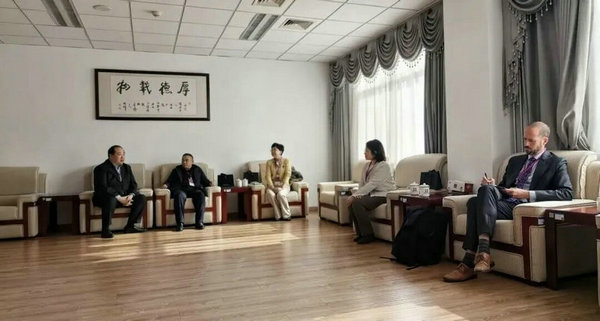
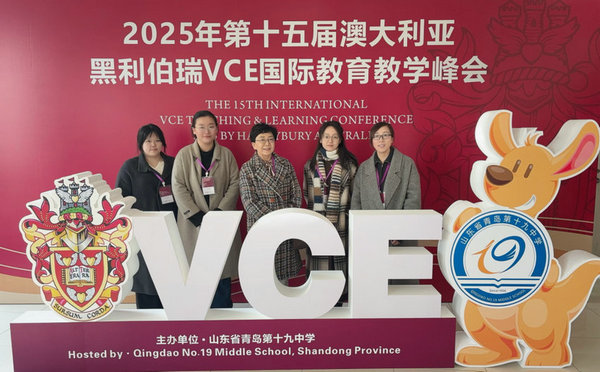
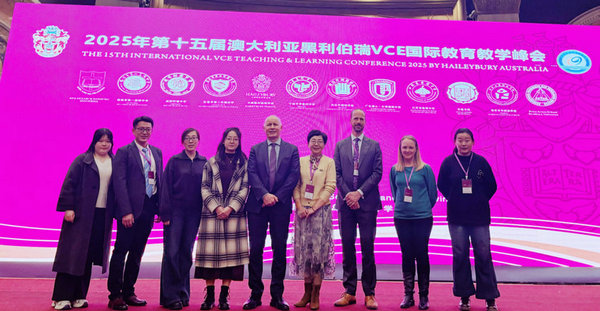
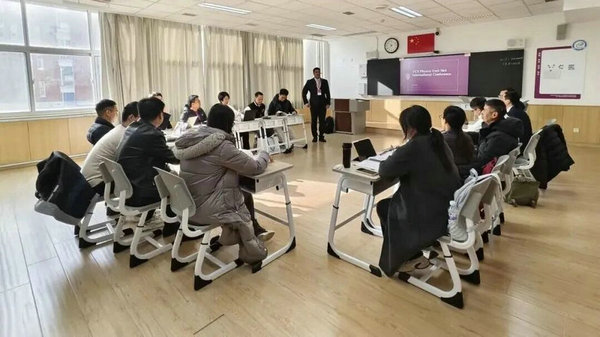
In the first place, after the opening ceremony, Vice Chairman Madam Huang Wenli of Anqing Foreign Language School and Vice Principal Dr. Stephen Muller of Haileybury School engaged in in-depth discussions on the international programs and jointly envisioned future development. Both sides, with a global perspective, conducted multi-dimensional and forward-looking exchanges on key areas such as educational trends, program implementation, teacher development, and student growth. Specifically, Dr. Muller particularly commended the progress our school has made in international curriculum cooperation, explicitly expressing his full support for our school's internationalization direction. Also, he emphasized his willingness to continuously deepen collaboration with our school to jointly promote educational innovation and help every student reach a broader stage of growth.
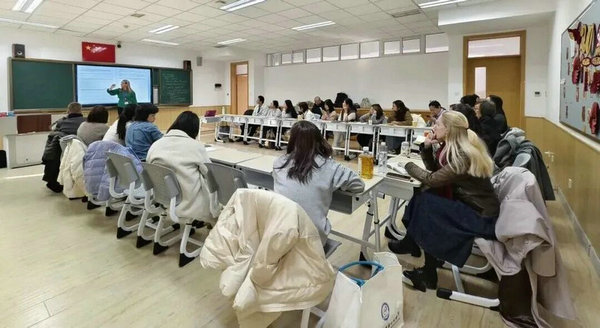
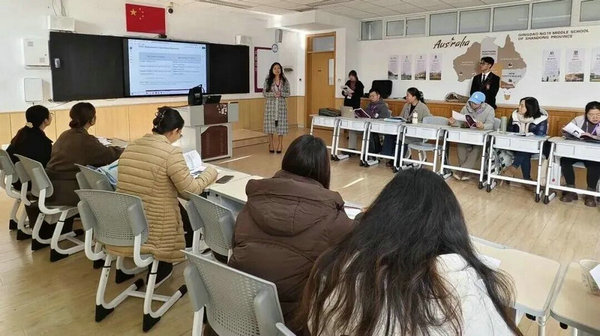
In the second place, this academic summit aimed to promote the high-quality development of education in various disciplines. Representatives of teachers from multiple institutions gathered to discuss key issues in their respective fields, share teaching experiences, explore practical challenges, and jointly explore solutions. Senior mentors from Harrow School participated in the event in depth throughout, relying on their rich teaching experience to provide professional guidance and injecting a distinct international perspective into the discussion.
In the third place, this summit focused on teaching practice and the cultivation of literacy skills. Through diverse content and in-depth discussions, it established a high-level platform for ideological exchange, allowing me to gain a lot from this immersive professional learning experience. Besides, the summit's content closely aligned with teaching realities, combining theoretical depth with practical value. During the demonstration class observation, teachers used a problem chain throughout the class, guiding students to apply effective methods to analyze texts and visual techniques, thus achieving the integration of language learning and art appreciation, and vividly demonstrating the effectiveness of immersive teaching. On the other hand, text analysis laid emphasis on multiple dimensions such as cultural background and structural features, emphasizing the consolidation of language foundation while also emphasizing cross-cultural understanding and critical thinking cultivation, providing a clear and feasible path for similar teaching. Additionally, in writing teaching, related topics precisely aligned with academic writing requirements. More remarkably, the mentors systematically explained the logical construction of persuasive texts, from argumentation extraction to argumentation advancement, layer by layer; in the meantime, they stressed the balance of viewpoints and emotions, explaining specific techniques for enhancing the persuasiveness of the text through examples. Moreover, the introduced writing framework was particularly practical, clearly presenting the logical development method through case analysis. Later on, the subsequent group discussion sessions allowed teachers to exchange and evaluate ideas in practical comparison, thus enabling me to have a clearer understanding of the evaluation dimensions and improvement directions for writing teaching.
In the fourth place, during this exchange event, Harrow School presented highly valuable insights in that the school focused on typical teaching materials and systematically organized the knowledge chain from basic theories to advanced applications, establishing a clear learning gradient framework. During the sharing session, experts shared their knowledge in full, not only providing reference for learning resources, but also elaborately explaining the teaching methods and practical skills for various knowledge points, thus helping the participating teachers enhance their ability in application guidance. Meanwhile, they deeply analyzed the latest academic evaluation standards, clearly explaining the scoring principles, scoring points, and common precautions, providing guidance for subsequent teaching and exam preparation. Evidently, the content of this exchange was rich, which effectively enhanced the professional cognition and practical ability of the participating teachers, laying a solid foundation for the optimization of teaching work.
Last but not the least, this seminar laid emphasis on the core and practice of physics teaching, which provided me with a lot of valuable insights. The main points I had learned were as follows: First, we should attach importance to 'effective communication' to make physics classes more relevant to students. Through methods such as 'contextual introduction' and 'classroom interaction', I realized that physics teaching should start from life and be combined with practice. For example, asking questions based on common phenomena and encouraging students to explain experimental ideas could effectively guide students to think actively and truly understand physical laws. What's more, we should pay attention to 'graded communication' to meet the needs of different students. For instance, the group learning, differentiated guidance, and different communication methods for students with different basic levels mentioned in the training have given me a lot of inspiration. Furthermore, we should leverage the guiding role of evaluation. More noticeably, the multi-evaluation system introduced at the seminar has helped me better understand how to promote students' all-round development through evaluation, not only focusing on learning outcomes, but also emphasizing the learning process, depth of understanding, and practical application, which helped to shift teaching from 'transmitting knowledge' to 'developing abilities', thus guiding students to form scientific thinking methods. Therefore, this learning has updated my teaching concepts, providing me with specific practices. Accordingly, in the future, I would plan to try more contextualized and graded communication methods in the classroom, using evaluation tools to motivate students to actively participate. Also, I would continue to deeply participate in teaching research, discuss with colleagues, and continuously improve teaching effectiveness to ensure that students would truly understand physics and apply it.
In a nutshell, at the 2025 Qingdao International Education and Teaching Summit, the teachers of our International Department gained a lot in that not only did they establish deep academic friendships with colleagues from other schools, but they also made substantial progress in professional understanding and educational concepts. More remarkably, we are well aware that the journey towards internationalizing education is still long and arduous. In the meantime, the entire teachers with the International Department will continue to uphold the spirit of keeping pace with the times and being pragmatic and enterprising, striving to build a higher-quality educational cooperation platform, and cultivating new era individuals with both international perspectives and a sense of patriotism.
CORYRIGHT © 2011 WWW.AQWGY.NET. ALL RIGHTS RESERVED